
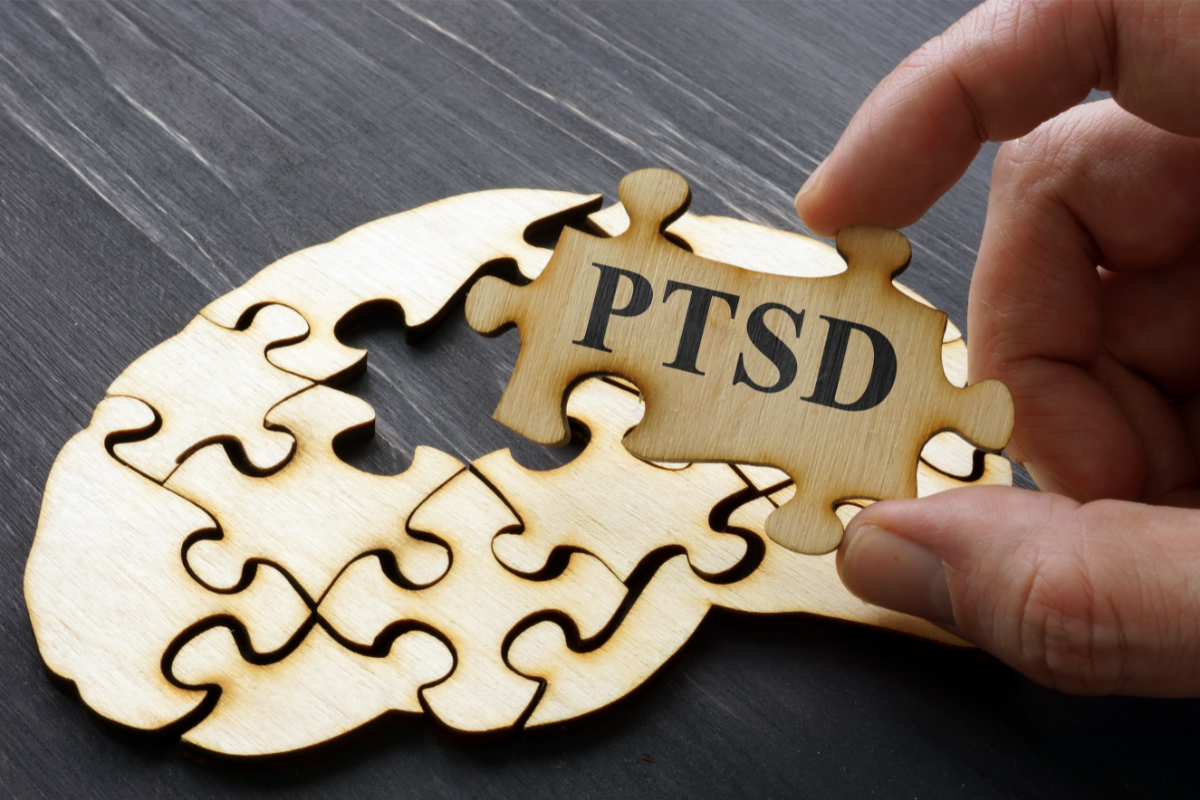
PTSD in civilians is common. Post-traumatic stress disorder (PTSD) is a mental health condition that can follow an event where your life, or someone else's, was in danger. Combat is one cause. Assault, car accidents, natural disasters, sudden loss and childhood abuse are others. You do not need to have served in the military to develop PTSD. And you do not have to face it alone.
Many people still link it with veterans. That picture leaves a lot of people out. This guide covers the everyday events that can lead to it, the four groups of symptoms, what hypervigilance and C-PTSD mean, and which kinds of care have the most research behind them. If you want the basics first, start with what PTSD is.
Can non-military people have PTSD?
Yes. The U.S. National Institute of Mental Health (NIMH) says it plainly: "Anyone can develop PTSD at any age. This includes combat veterans and people who have experienced or witnessed a physical or sexual assault, abuse, an accident, a disaster, a terror attack, or other serious events."
The numbers back this up. The VA National Center for PTSD estimates that "About 6 out of every 100 people (or 6% of the U.S. population) will have PTSD at some point in their lives." It also reports that "In 2020, about 13 million Americans had PTSD."
Veterans do have higher rates. The same VA page states that "Veterans are more likely to have PTSD than civilians." But a higher rate in one group does not make this a military-only problem. Women also face higher odds than men. The VA estimates that "About 8 of every 100 women (or 8%) and 4 of every 100 men (or 4%) will have PTSD at some point in their life."
It helps to know this too: "Most people who go through a traumatic event will not develop PTSD," the VA notes. Strong reactions in the first days and weeks are normal. PTSD is when those reactions stay, or grow, and get in the way of daily life.
So why do some people experience PTSD while others do not? Many things play a part, such as how intense the event was and how much support you had afterward.
What counts as a traumatic event?
Not every hard time is the kind of trauma that leads to PTSD. The VA explains: "To be at risk for PTSD, the trauma must be a shocking and dangerous event that you see or that happens to you. During this type of event, you think that your life or others' lives are in danger."
That covers a wide range of events. It includes things that happen to you and things you see happen to someone else. NIMH adds that "Sometimes, learning that a relative or close friend experienced trauma can cause PTSD."
Common causes of PTSD in civilians
These are the events that come up most often outside the military. Each one can lead to the disorder, though most people who live through them recover.
Violence and abuse
Violent crime, domestic abuse and community violence in civilian settings can leave deep psychological wounds. The VA notes that sexual assault makes PTSD more likely.
People who have lived through violence may relive it, feel intense fear or helplessness, or go numb. It can happen to anyone, whatever their job or background.
Car crashes and serious injuries
A bad car crash, a fall or an injury at work can be a traumatic event. Being hurt raises the odds. The VA notes that "being injured during the trauma can increase risk of PTSD."
Avoidance often follows. NIMH gives this example: "some people may avoid driving or riding in a car after a serious car accident." Someone hurt on the job may dread going back to the same workplace.
Natural disasters
Tornadoes, floods, fires and earthquakes can turn a normal day into a fight to stay safe. Reminders can bring it all back. As the VA puts it, "If you were in an earthquake, you may avoid watching movies about earthquakes."
Witnessing harm to others
It does not have to happen to you. Witnessing a shooting, a crash or a death can be enough. NIMH lists "Getting hurt or seeing people hurt or killed" among the risk factors.
Sudden or violent loss
The sudden or violent death of a loved one can bring on PTSD symptoms on top of grief. A person may keep reliving the moment, feel constant fear, or feel numb. When that goes on for weeks and blocks daily life, it may be more than grief alone.
Childhood abuse
Early life shapes how safe the world feels. Abuse in childhood can have lasting effects and leave a person on guard for years. NIMH lists "Exposure to previous traumatic experiences, particularly during childhood" as a risk factor. Long-term abuse is also linked to complex PTSD, covered below. For more, read what healing from childhood trauma looks like.
Symptoms of PTSD: the four groups
The VA groups the symptoms of PTSD into 4 types, and a diagnosis needs symptoms from each one.
Reliving the event. Nightmares, flashbacks and upsetting memories. Triggers such as news reports, a loud bang or a smell can bring the event back.
Avoidance. Staying away from people, places and activities that are reminders of what happened. Trying not to think or talk about it.
Negative thoughts and feelings. Guilt, shame, feeling numb, losing interest in things you used to enjoy, or believing no one can be trusted.
Feeling on edge. Trouble sleeping, trouble focusing, being easily startled, sudden anger or risky behavior. This is also called hyperarousal.
NIMH lists the criteria for PTSD in adults. Symptoms from each group must last "for at least 1 month." They also "must be severe enough to interfere with aspects of daily life, such as relationships or work."
Timing varies. NIMH notes that "Symptoms of PTSD usually begin within 3 months of the traumatic event, but they sometimes emerge later." It adds that "People with PTSD often have co-occurring conditions, such as depression, substance use, or one or more anxiety disorders." Some may also have "suicidal thoughts."
Only a trained professional can make the diagnosis. As the VA puts it, "Only a mental health provider can diagnose PTSD." This article cannot tell you whether you have it. It can help you put words to what you notice.
What is hypervigilance?
Hypervigilance means being on high alert all the time. Your mind and body keep scanning for danger, even when you are safe. Cleveland Clinic describes it as "Excessive attention to the possibility of danger." It belongs to the fourth symptom group. The VA describes people in that group as "jittery, or always alert and on the lookout for danger."
In daily life, it can look like this:
Feeling tense or on guard in crowds or new places.
Being easily startled by a noise.
Difficulty falling asleep or staying asleep.
Finding it hard to focus.
This heightened state made sense during the danger. The trouble is that it stays switched on afterward, and over time it wears you out. See these ideas for calming an overactive nervous system.
What is C-PTSD?
C-PTSD stands for complex posttraumatic stress disorder. Cleveland Clinic describes it as a condition "that can develop if you experience chronic (long-term) trauma." Examples include long-term child abuse, long-term domestic violence and war.
Complex PTSD shares the core signs of PTSD, such as flashbacks, avoidance and hypervigilance. Cleveland Clinic notes that people with it also tend to have lasting problems with:
Managing emotions.
Their sense of who they are.
Relationships.
Experts do not all agree on how to label it. The World Health Organization lists complex PTSD in its ICD-11. The DSM-5, the diagnostic manual of the American Psychiatric Association, does not list it as its own condition.
PTSD in civilians who live through war
The VA National Center for PTSD reviewed research on people living in war zones. Its page, Mental Health Aspects of Prolonged Combat Stress in Civilians, answers several questions people search for.
What types of traumatic events do civilians experience during war? The review lists "life threat; being bombed, shot at, threatened, or displaced; being confined to one's home; losing a loved one or family member; suffering from financial hardships; and having restricted access to resources such as food, water, and other supplies."
What are the effects of war-zone stressors on civilians? Most of this research was done with refugees. The review states that "refugees exhibit high rates of PTSD and depression as well as other psychiatric problems, particularly if they were tortured." Still, it concludes that "many civilians respond to prolonged war with various stress symptoms, but as time passes people seem to recover and stress levels return to normal."
What are the long-term effects? "Although most civilians who are exposed to war stress will not develop long-term mental-health problems, some will, particularly if they have been exposed to severe stressors." In one study it cites, of 124 Jewish Holocaust survivors, "46% met criteria for PTSD."
Is war stress linked to physical health problems? The review reports "accumulating evidence that PTSD is associated with long-term physical health problems." It also cites signs that war may affect the immune system.
How do children respond to prolonged stress? "The literature suggests that children are also affected but that the majority will not suffer from long-term consequences." As with adults, children in refugee camps had more psychological problems than other children.
One finding runs through the whole review: more extreme stress tends to bring more severe symptoms. If you lived through war, as an adult or a child, those experiences count, even years later.
PTSD treatment: what helps
The good news is that PTSD treatment helps many people. The VA says: "For many people, treatment can get rid of symptoms altogether. Others find they have fewer symptoms or feel that their symptoms are less intense."
NIMH explains that "The main treatments are psychotherapy, medications, or a combination of psychotherapy and medications." For treating PTSD, the VA states that "A few trauma-focused psychotherapies are the most highly recommended treatments for PTSD." These focus on the memory of the event or what it means to you. The three it names are:
Cognitive Processing Therapy (CPT). You learn how the event changed your thoughts and feelings, and how to shift them.
Prolonged Exposure (PE). You slowly face memories and safe situations you have been avoiding.
EMDR. In the VA's words, this is where "you process the memory of your trauma while paying attention to a back-and-forth movement or sound." Learn more about EMDR in Brentwood.
This matters for the treatment of PTSD. General talk therapy and trauma-focused therapy are not the same thing. The VA's top picks are the trauma-focused kind.
Medication can help some people too. The VA names sertraline, paroxetine and venlafaxine as recommended options. Whether medicine fits you is a choice to make with your doctor or medical provider.
Coping day to day also matters. NIMH suggests steps such as these:
Keep routines for meals, exercise and sleep.
Spend time with people you trust, and tell them about your triggers.
Set realistic goals.
Avoid alcohol and drugs.
Expect symptoms to improve gradually, not right away.
Getting support in Brentwood and Nashville
Whether your experience came from combat or from civilian life, help is available. Dave Saunders of Dave Saunders Counseling is a licensed counselor (LPC-MHSP, NCC) in Brentwood, Tennessee. He sees adults 18 and up from all walks of life. He has worked with combat Marines and members of special forces. He has also worked with military support personnel. His training includes EMDR (Level II) and TF-CBT, short for Trauma-Focused Cognitive Behavioral Therapy. Sessions take place in person at his Brentwood office, and clients come from Nashville and nearby. See his page on PTSD therapy for Nashville clients.
To see whether he is a good fit, start with a free 10-minute consultation. Just get in touch here.
If you are in crisis or thinking about harming yourself, please call or text 988.